

Julia Enthoven left Google in 2017 without a big idea. She and her cofounder spent ten weeks on one that didn’t work, shut it down, and built a tiny website that burned text onto video memes. People loved it. A dozen small tools later, users kept asking for the same thing: let us use them together. That request became Kapwing, an online video editor now doing around $10M in annual recurring revenue.
Julia first answered our questions in September 2023, but the interview never went out. When we reached back this year, she updated it, and the Kapwing she describes now has moved from simple editing tools to AI-generated video and a blooming enterprise business.
Why it matters: → The biggest products often start as the smallest ones
Worth your time if: → You’re building tools and wondering which one deserves your full attention
The thing to steal: → Ship many tiny tools, then listen for the request your users keep repeating
Julia, tell us who you are and what Kapwing has become
I’m a San Francisco-based tech founder and the cofounder/CEO of Kapwing. Originally from Dallas, I moved to California for school in 2011 and studied Mathematics & Computer Science at Stanford. After starting my career as an Associate Product Manager at Google, I left to start Kapwing with my cofounder.
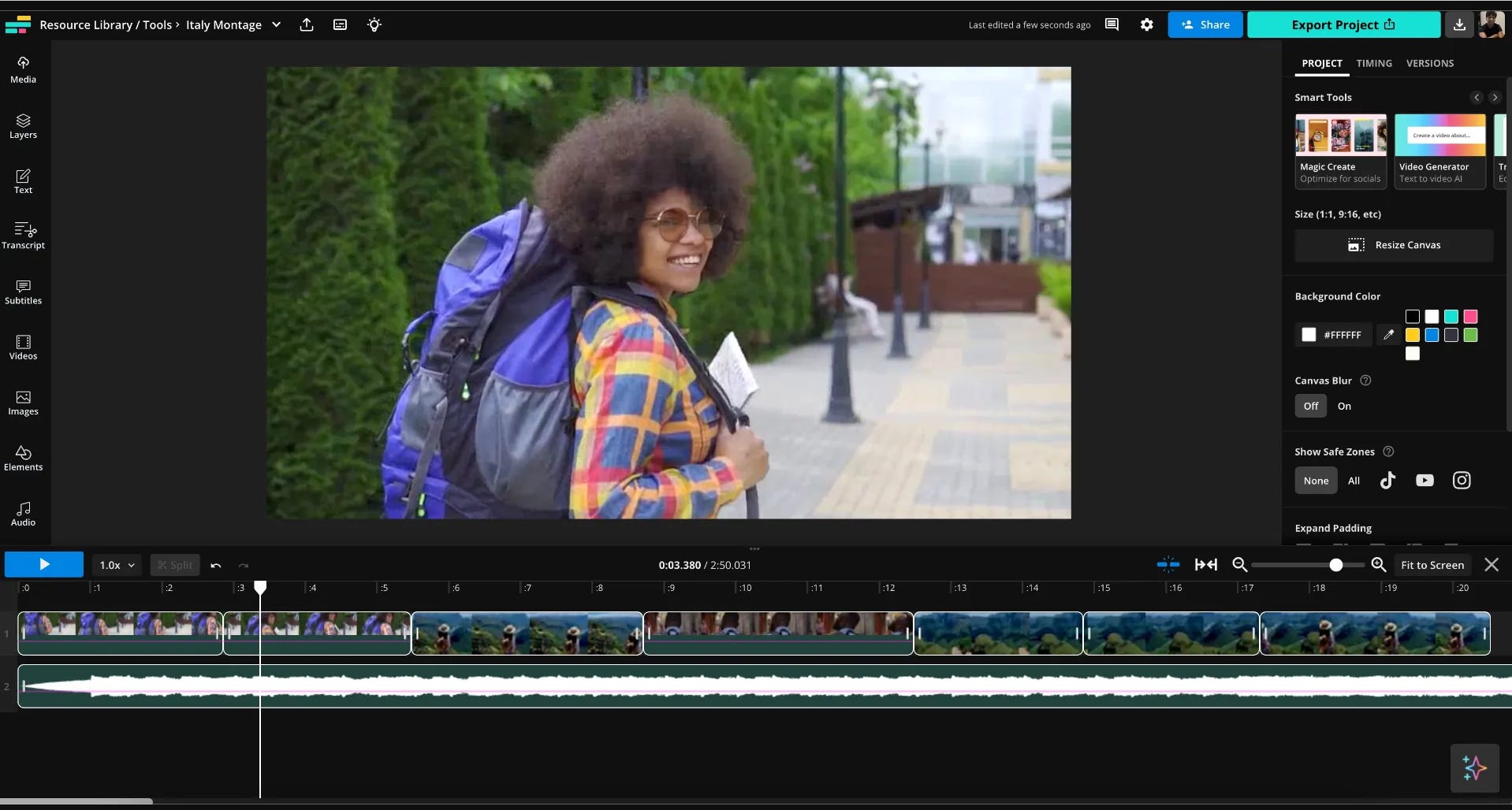
Kapwing’s mission is to empower creative and marketing teams to make more and better video together. Kapwing is an online editor built for modern formats and fast collaboration: subtitles, repurposing, templates, and all the everyday workflows that help teams publish consistently.
In the last couple of years, we’ve gone deep on generative AI. Kapwing AI (also called Kai) lets you describe the video you want and instantly generates a first draft in a multi-layer timeline (script, scenes, visuals, voiceover, captions, music, and sound effects), so you can iterate by chatting or editing directly on the canvas.
If you’d like to see what we’re all about, feel free to check out our website: Kapwing
You were a PM at Google. What made you walk away, and how did a meme generator turn into a company?
In 2017, I was at Google, struggling to find a great team to work for. My organization had undergone a big exodus when my boss and a few senior PMs left, so I felt that I’d stopped growing or having as much impact. I was looking around at other teams at Google and interviewing at other companies, both big and small.
I was inspired by some of the founders I got to meet during the interview process, including Garrett Lord at Handshake and Baiju Bhatt at Robinhood. A couple of months into the job search, I caught up with Eric Lu, a former colleague of mine who had been a PM on the same team before he left Google to try and start his own company. Eric had a couple of failed launches under his belt, so when he heard that I was looking he pitched me on joining him in Startup Land, as a cofounder.
I’ve always had the entrepreneurial itch and decided to go for it. We worked on an idea that didn’t work for 10 weeks before shutting it down and turning our attention to a different problem that seemed very small at the time. Both software engineers by training, we built a simple website to make video memes. It took about three weeks, and another three weeks to add a Stripe paywall and subscription. You uploaded a video, image or GIF, input the text you wanted, selected “black” or “white” for background color, and it returned a meme to you with the text burned into the top, above the image. Although it was extremely simple, people loved it. Within a few months, we had thousands of people using the website just through Google Search.
Over the next few quarters, we built 12 of these individual video websites. Some, like the Subtitles tool, were instant hits and had organic traction from word of mouth. Others, like a Stop Motion Maker, flopped. We got feedback from our users as our user base rose to tens of thousands of people every day. Since we are software engineers by training, our only costs to develop the MVP were hosting fees and the domain name.
One of the most common things we heard is that people wanted to use the tools together. So, we started realizing there’s a bigger problem: video editing is extremely hard and inaccessible. This struck a chord with us as we’d both struggled ourselves with incumbent video editing software like Premiere and Final Cut Pro. Eric and I envisioned something more integrated with the web, designed for teams and for modern formats. That’s the vision we pitched back in 2018, and we’re still building towards it today.
Nobody knew Kapwing existed. Where did the first paying customer come from?
Our first customer came through SEO. We had optimized our initial tools, like the Video Resizer, for search queries like “Trim Video,” and people paid us to remove the watermark. To get our pages to rank for queries like this, we had to get backlinks to our website, which is a challenge when you’re a tiny startup that no one cares about. We got backlinks with dozens of press stunts that attracted attention and by sharing our journey on our company blog and YouTube. Every backlink we acquired was a grind, and we tried many things that didn’t work. But I’m very grateful for SEO, as it allowed us to bootstrap our company with essentially no marketing spend.
You make video software. Did video end up being your main growth channel too?
As we’ve grown, video platforms like YouTube and TikTok have been major sources of acquisition for us too. We’ve grown our own organic channels, building our own channels to 200k+ subscribers on YouTube and a growing presence on TikTok and LinkedIn. More recently, we’ve invested in LinkedIn also to reach a more professional audience. We also started an affiliate program and champion Slack channel to activate brand champions online.
In most of what we do, we strive to practice what we preach, using our own software to make a lot of videos for organic marketing. We have a small team of in-house content creators to support our ongoing SEO operations and video creation.
From $24 seats to enterprise contracts: how does Kapwing charge?
Kapwing is a subscription business. Most customers are on our Pro plan (currently $24 per person per month, with a discount for annual billing) and use Kapwing for day-to-day editing, repurposing, and collaboration. We also offer Business and Enterprise plans for teams that need higher limits, admin controls, security features, and support. Kapwing AI is included in Kapwing subscriptions, with usage-based AI credits so teams can scale generation while keeping budgets predictable.
The Enterprise plan is more expensive with custom pricing options depending on the organization. Generally, contracts range from $5k-$20k per year for a professional team. Our Enterprise offering comes with premium account services; expanded access to Kapwing AI and our AI-powered editing tools; and enhanced security features.
Enterprise has continued to grow as more professional teams adopt Kapwing for collaborative video workflows and AI-assisted production. In the future, we plan to expand this business significantly, selling larger contracts to more Kapwing teams and pitching it to marketing teams looking to make more video content faster.
So where does all of that leave the business today?
We’re a multi-million dollar SaaS business. As of 2026, we’re around $10M in annual recurring revenue and have worked hard to stay capital-efficient with strong gross margins. Our focus now is scaling Kapwing AI while maintaining the reliability, control, and collaboration that teams expect.
Two offices, remote teammates and a running group. What does a normal day look like for you?
I’m generally based in San Francisco, but try to spend a few weeks each year in New York, where we also have a small office. Regardless of the coast I’m on, my typical day goes like this: I wake up just about every morning at 7am, work out, shower and commute into the office. Starting my day with a run helps me to clear my head and jumpstart a creative workday. I also prefer to work in-person vs at home as it helps me stay focused and collaborate with colleagues.
With two different hubs and a few fully-remote employees, Kapwing depends on cloud-based collaboration software to get work done. We use Slack, Lever, Figma, Shortcut, Google Docs, Notion, and of course Kapwing to get work done. Our team generally has lunch together in the middle of the day, sometimes on our rooftop if the weather is good enough. My work day is filled with a diverse mix of 1:1s, strategy meetings, reviews, and heads-down work time.
In the evenings, around 6 or 7pm, I commute home or meet up with friends or family. On Wednesdays, I meet up with a regular running group. Some evenings, I attend tech community or investor events. I try to maintain a great network of entrepreneurs and marketers to learn from, shadow, support, and share learnings with.
You killed your first idea after ten weeks. What would you tell someone starting out now?
When you’re just starting out, I recommend starting with a specific problem and striving to make your first dollar. This was something we did right without even realizing it, and it helped us learn some of the challenges we would need to overcome (i.e. SEO).
I also would encourage early-stage entrepreneurs to lean in to the risks of their business, doing the hardest things first and being real with themselves about their progress. Setting a clear milestone for ourselves helped Eric and me to shut down our first idea when it wasn’t working and move on to Kapwing, which has been a modest success. Talented entrepreneurs must also know when to shut down a failed business and move on.
Lastly, just keep going. So many people will not believe in you, so you have to have enough confidence and conviction in yourself to stay strong despite the doubters. I have had many highs and lows throughout the journey, but I’ve certainly learned that you have to depend on your own inner strength rather than the approval of others in the early stages.
Before we wrap, where can readers go to follow your work and try the apps?
Website: kapwing.com
Kapwing AI (Kai): kapwing.com/kai
Kapwing on X: @KapwingApp
Julia Enthoven on X: @JuliaEnthoven
The short version
Kapwing didn’t start with a grand vision. It started with a meme generator built in three weeks, a Stripe paywall added three weeks later, and a willingness to kill whatever wasn’t working. Twelve small tools taught Julia and Eric what users actually wanted, and the answer turned into a company.
From a Meme Maker to $10M ARR: How Kapwing Turned Tiny Video Tools Into a Real Company
Two ex-Google PMs, a three-week meme generator, and an SEO grind that let them bootstrap with almost no marketing spend.
just now
Julia Enthoven left Google in 2017 without a big idea. She and her cofounder spent ten weeks on one that didn’t work, shut it down, and built a tiny website that burned text onto video memes. People loved it. A dozen small tools later, users kept asking for the same thing: let us use them together. That request became Kapwing, an online video editor now doing around $10M in annual recurring revenue.
Julia first answered our questions in September 2023, but the interview never went out. When we reached back this year, she updated it, and the Kapwing she describes now has moved from simple editing tools to AI-generated video and a blooming enterprise business.
Why it matters: → The biggest products often start as the smallest ones
Worth your time if: → You’re building tools and wondering which one deserves your full attention
The thing to steal: → Ship many tiny tools, then listen for the request your users keep repeating
Julia, tell us who you are and what Kapwing has become
I’m a San Francisco-based tech founder and the cofounder/CEO of Kapwing. Originally from Dallas, I moved to California for school in 2011 and studied Mathematics & Computer Science at Stanford. After starting my career as an Associate Product Manager at Google, I left to start Kapwing with my cofounder.
Kapwing’s mission is to empower creative and marketing teams to make more and better video together. Kapwing is an online editor built for modern formats and fast collaboration: subtitles, repurposing, templates, and all the everyday workflows that help teams publish consistently.
In the last couple of years, we’ve gone deep on generative AI. Kapwing AI (also called Kai) lets you describe the video you want and instantly generates a first draft in a multi-layer timeline (script, scenes, visuals, voiceover, captions, music, and sound effects), so you can iterate by chatting or editing directly on the canvas.
If you’d like to see what we’re all about, feel free to check out our website: Kapwing
You were a PM at Google. What made you walk away, and how did a meme generator turn into a company?
In 2017, I was at Google, struggling to find a great team to work for. My organization had undergone a big exodus when my boss and a few senior PMs left, so I felt that I’d stopped growing or having as much impact. I was looking around at other teams at Google and interviewing at other companies, both big and small.
I was inspired by some of the founders I got to meet during the interview process, including Garrett Lord at Handshake and Baiju Bhatt at Robinhood. A couple of months into the job search, I caught up with Eric Lu, a former colleague of mine who had been a PM on the same team before he left Google to try and start his own company. Eric had a couple of failed launches under his belt, so when he heard that I was looking he pitched me on joining him in Startup Land, as a cofounder.
I’ve always had the entrepreneurial itch and decided to go for it. We worked on an idea that didn’t work for 10 weeks before shutting it down and turning our attention to a different problem that seemed very small at the time. Both software engineers by training, we built a simple website to make video memes. It took about three weeks, and another three weeks to add a Stripe paywall and subscription. You uploaded a video, image or GIF, input the text you wanted, selected “black” or “white” for background color, and it returned a meme to you with the text burned into the top, above the image. Although it was extremely simple, people loved it. Within a few months, we had thousands of people using the website just through Google Search.
Over the next few quarters, we built 12 of these individual video websites. Some, like the Subtitles tool, were instant hits and had organic traction from word of mouth. Others, like a Stop Motion Maker, flopped. We got feedback from our users as our user base rose to tens of thousands of people every day. Since we are software engineers by training, our only costs to develop the MVP were hosting fees and the domain name.
One of the most common things we heard is that people wanted to use the tools together. So, we started realizing there’s a bigger problem: video editing is extremely hard and inaccessible. This struck a chord with us as we’d both struggled ourselves with incumbent video editing software like Premiere and Final Cut Pro. Eric and I envisioned something more integrated with the web, designed for teams and for modern formats. That’s the vision we pitched back in 2018, and we’re still building towards it today.
Nobody knew Kapwing existed. Where did the first paying customer come from?
Our first customer came through SEO. We had optimized our initial tools, like the Video Resizer, for search queries like “Trim Video,” and people paid us to remove the watermark. To get our pages to rank for queries like this, we had to get backlinks to our website, which is a challenge when you’re a tiny startup that no one cares about. We got backlinks with dozens of press stunts that attracted attention and by sharing our journey on our company blog and YouTube. Every backlink we acquired was a grind, and we tried many things that didn’t work. But I’m very grateful for SEO, as it allowed us to bootstrap our company with essentially no marketing spend.
You make video software. Did video end up being your main growth channel too?
As we’ve grown, video platforms like YouTube and TikTok have been major sources of acquisition for us too. We’ve grown our own organic channels, building our own channels to 200k+ subscribers on YouTube and a growing presence on TikTok and LinkedIn. More recently, we’ve invested in LinkedIn also to reach a more professional audience. We also started an affiliate program and champion Slack channel to activate brand champions online.
In most of what we do, we strive to practice what we preach, using our own software to make a lot of videos for organic marketing. We have a small team of in-house content creators to support our ongoing SEO operations and video creation.
From $24 seats to enterprise contracts: how does Kapwing charge?
Kapwing is a subscription business. Most customers are on our Pro plan (currently $24 per person per month, with a discount for annual billing) and use Kapwing for day-to-day editing, repurposing, and collaboration. We also offer Business and Enterprise plans for teams that need higher limits, admin controls, security features, and support. Kapwing AI is included in Kapwing subscriptions, with usage-based AI credits so teams can scale generation while keeping budgets predictable.
The Enterprise plan is more expensive with custom pricing options depending on the organization. Generally, contracts range from $5k-$20k per year for a professional team. Our Enterprise offering comes with premium account services; expanded access to Kapwing AI and our AI-powered editing tools; and enhanced security features.
Enterprise has continued to grow as more professional teams adopt Kapwing for collaborative video workflows and AI-assisted production. In the future, we plan to expand this business significantly, selling larger contracts to more Kapwing teams and pitching it to marketing teams looking to make more video content faster.
So where does all of that leave the business today?
We’re a multi-million dollar SaaS business. As of 2026, we’re around $10M in annual recurring revenue and have worked hard to stay capital-efficient with strong gross margins. Our focus now is scaling Kapwing AI while maintaining the reliability, control, and collaboration that teams expect.
Two offices, remote teammates and a running group. What does a normal day look like for you?
I’m generally based in San Francisco, but try to spend a few weeks each year in New York, where we also have a small office. Regardless of the coast I’m on, my typical day goes like this: I wake up just about every morning at 7am, work out, shower and commute into the office. Starting my day with a run helps me to clear my head and jumpstart a creative workday. I also prefer to work in-person vs at home as it helps me stay focused and collaborate with colleagues.
With two different hubs and a few fully-remote employees, Kapwing depends on cloud-based collaboration software to get work done. We use Slack, Lever, Figma, Shortcut, Google Docs, Notion, and of course Kapwing to get work done. Our team generally has lunch together in the middle of the day, sometimes on our rooftop if the weather is good enough. My work day is filled with a diverse mix of 1:1s, strategy meetings, reviews, and heads-down work time.
In the evenings, around 6 or 7pm, I commute home or meet up with friends or family. On Wednesdays, I meet up with a regular running group. Some evenings, I attend tech community or investor events. I try to maintain a great network of entrepreneurs and marketers to learn from, shadow, support, and share learnings with.
You killed your first idea after ten weeks. What would you tell someone starting out now?
When you’re just starting out, I recommend starting with a specific problem and striving to make your first dollar. This was something we did right without even realizing it, and it helped us learn some of the challenges we would need to overcome (i.e. SEO).
I also would encourage early-stage entrepreneurs to lean in to the risks of their business, doing the hardest things first and being real with themselves about their progress. Setting a clear milestone for ourselves helped Eric and me to shut down our first idea when it wasn’t working and move on to Kapwing, which has been a modest success. Talented entrepreneurs must also know when to shut down a failed business and move on.
Lastly, just keep going. So many people will not believe in you, so you have to have enough confidence and conviction in yourself to stay strong despite the doubters. I have had many highs and lows throughout the journey, but I’ve certainly learned that you have to depend on your own inner strength rather than the approval of others in the early stages.
Before we wrap, where can readers go to follow your work and try the apps?
Website: kapwing.com
Kapwing AI (Kai): kapwing.com/kai
Kapwing on X: @KapwingApp
Julia Enthoven on X: @JuliaEnthoven
The short version
Kapwing didn’t start with a grand vision. It started with a meme generator built in three weeks, a Stripe paywall added three weeks later, and a willingness to kill whatever wasn’t working. Twelve small tools taught Julia and Eric what users actually wanted, and the answer turned into a company.
If you know any founder who would take advantage of the lessons
shared in this interview, forward it to them.
AJ
Got an interesting business to share? Write to us!
If you know any founder who would take advantage of the lessons
shared in this interview, forward it to them.
AJ
Got an interesting business to share? Write to us!