

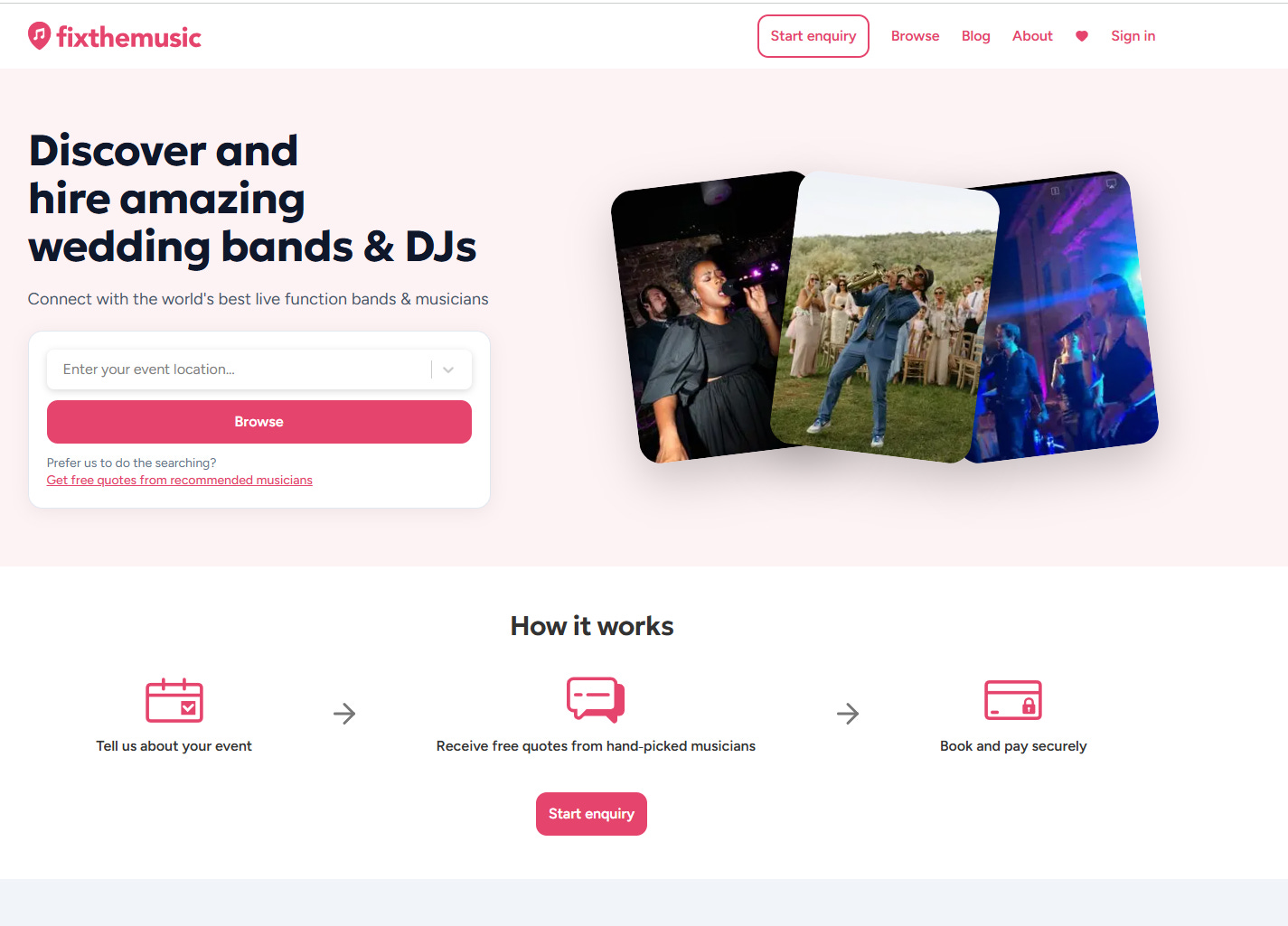
Ed spent a couple of years as a lawyer in London and Hong Kong before the daily grind of a city job wore thin. He had studied music since he was a child, so with a friend he came up with an Airbnb-style platform for booking live musicians. The first version cost nothing but hosting. The first customers came from hours spent in Facebook groups where brides were asking for band recommendations. Today FixTheMusic connects musicians, bands and DJs with wedding couples and event planners, and it makes seven figures a year.
Ed answered our questions in August 2025.
Why it matters: → A two-sided marketplace can start with zero budget if you do the boring work by hand
Worth your time if: → You’re building a marketplace and wondering which side to win first
The thing to steal: → Make one side free and effortless, then hunt the other side where it already asks for help
Ed, set the scene: where are you from and what does FixTheMusic do?
My name’s Ed - I’m 38. I grew up on a little island between the UK and France called Jersey. My business is called FixTheMusic. We’re a platform for booking live musicians, bands and DJs - connecting them to wedding couples and professional event planners.
You can read more about us here: fixthemusic.com/about
You were a lawyer in London and Hong Kong. What made you walk away?
I always wanted to do something entrepreneurial and after working as a lawyer in London & Hong Kong for a couple of years, I became a bit fed up of the daily grind of a city job. I’d studied music from an early age and also at university, so with a friend we came up with the idea of starting an Airbnb-style platform for booking live music.
How did you build the first version, and what did it cost?
I’m friends with a few incredible computer scientists who I met at university, and one of them helped to create our first website / MVP version of the site.
Nothing really. Apart from the hosting costs, we built the website with nothing and found our first customers without spending anything.
A marketplace needs both sides. Where did the first couples come from?
Once we had the first version of our website live, we listed a few bands and musicians on it and then started trawling Facebook groups searching for couples (mostly brides) asking for recommendations for musicians for their weddings. We also gatecrashed a few wedding fairs in London where we left flyers and business cards. Finding individual customers manually from Facebook was definitely the best place in the early days. It took a long time but didn’t cost anything and we managed to build up a few early reviews on Google which built up over time. We found it far easier to sign up musicians & bands on the marketplace as we don’t charge them anything to list on the website, and we did all of the work to create their profile.
And today, how do people find you?
Most of our customers arrive from organic Google search. We’ve recently started a small amount of PPC to test the waters. We’re also trying to grow our social media channels (TikTok and Instagram in particular).
How does FixTheMusic make money?
When a band or musician secures a booking through our website, we deduct a small commission from the overall price. Some other platforms such as Airbnb and Deliveroo charge fees to both sides of the marketplace, but we prefer a simple and transparent model and don’t have any plans to change this at the moment.
So how big is it now?
The business is currently making 7 figures annually.
The short version
FixTheMusic started with a borrowed MVP, zero marketing spend and a founder willing to read wedding threads on Facebook one by one. Musicians joined for free because the team built their profiles for them, couples came through early reviews and organic search, and a single commission on each booking turned it into a seven-figure business.
You can find FixTheMusic at fixthemusic.com, on Instagram and Ed on LinkedIn.
If you know any founder who would take advantage of the lessons shared in this interview, forward it to them.