

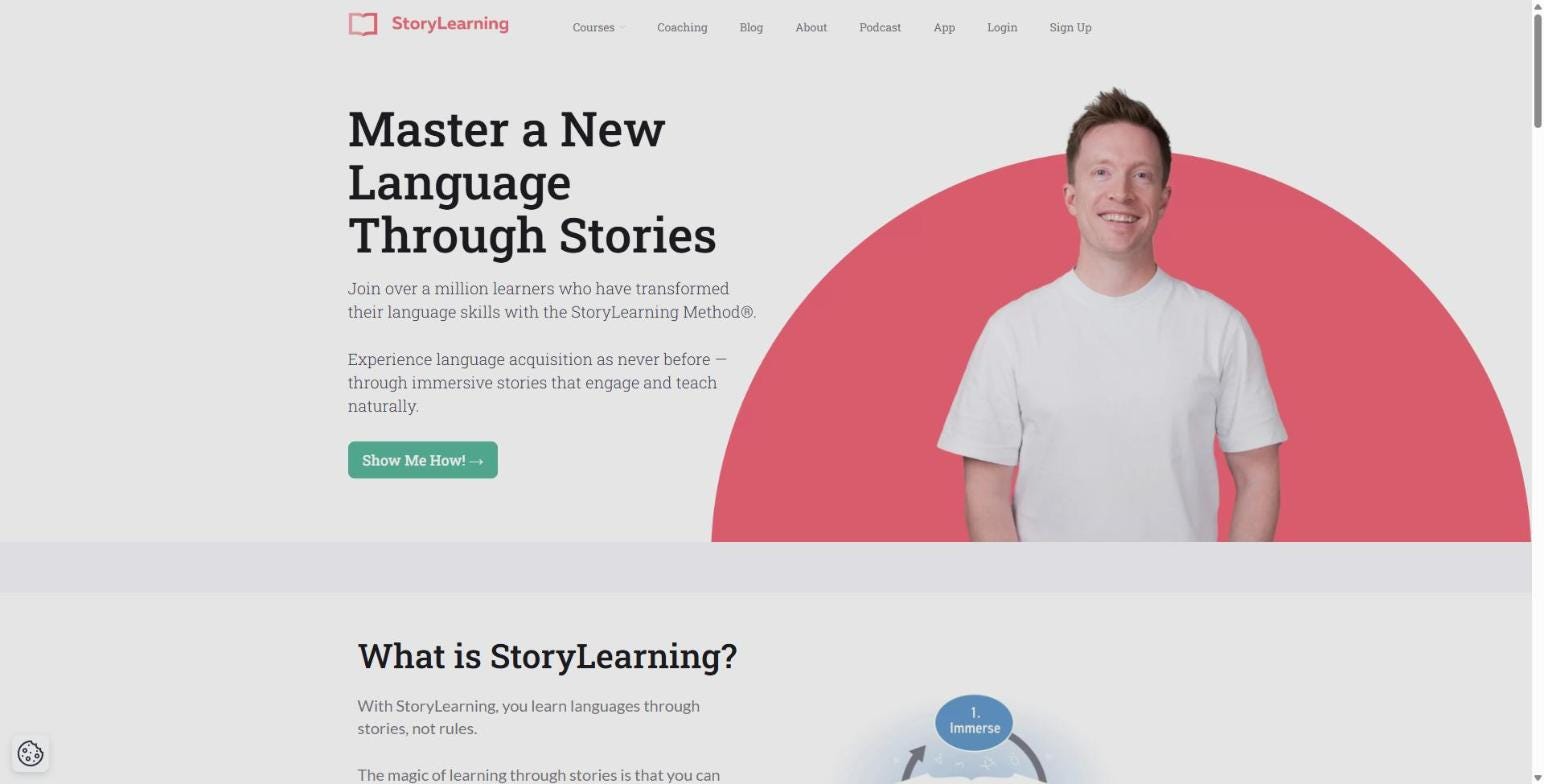
Olly Richards had a string of unrelated careers before he started blogging about his passion, language learning, in 2013. He was bored in an office job and wanted a creative outlet. What set him apart was patience: he spent two years publishing and building an email list before selling a thing. When he finally launched his first product, a live webinar series, he already had 2,000 subscribers and knew what they struggled with. Today StoryLearning has seven figures of annual profit and an enterprise value of $10 million, and Olly uses it as a living case study in his newsletter.
Olly answered our questions in November 2023.
Why it matters: → An audience built first makes every later launch easier
Worth your time if: → You’re building a content-led business or an online education brand
The thing to steal: → Sell one front-end product only, then offer the rest of the ecosystem to customers
Olly, how did you get here?
I had a series of random careers, from jazz musician to English teacher, before eventually starting a blog on my passion, language learning, and growing it into a $10 million online business.
Today, I write a newsletter at OllyRichards.co teaching other online entrepreneurs how to scale their businesses to 7+ figures, using StoryLearning as a “living case study”.
What made you start a blog, and when did you start selling?
I began with a simple WordPress blog back in 2013. I think I was looking for a creative outlet, as I was bored in my office job. I started to blog about language learning, and at the same time began to learn about blogging and marketing. I figured out quite early that the secret to blogging was punishing consistency and building an email list, so I did this very deliberately for the first two years before selling anything. By the time it made sense to launch my first product, I already had an email list of 2,000 people and a good idea of what they struggled with. My first course was a live webinar series that had no cost to it whatsoever, other than the webinar platform itself.
Was there a marketing plan behind those first customers?
My entire marketing strategy was blogging (for SEO and audience building) and guest posting (for traffic). But I didn’t really think of it as a marketing strategy as such. My aim was simply to create helpful content for people and to build an audience around my brand. The people I was learning from at the time instilled a belief in me that the secret was to just teach great stuff, and the audience and money would follow. I think this is why I ended up succeeding: other people in the space were too impatient and transactional, whereas I was committed to building an audience and genuinely helping people. My website became one of the main resources in the language learning space, and the fact that I took the time to build this with care really yielded huge dividends further down the line.
How does the marketing machine work at this size?
We have several layers to our marketing currently. Level one is organic, and includes multiple content marketing platforms, such as podcast and YouTube. Level two is internal marketing, and includes referrals and books. Level three is external marketing and includes affiliates and media. And finally level four is paid marketing, which is paid advertising and influencer marketing. The foundation of all of this, though, is an integrated content strategy, because that is how you convert cold traffic into warm leads who want to learn from you.
I recorded an entire training that explains our overall marketing strategy, called the 7-Figure Marketing Stack: ollyrichards.co/7fms
How does StoryLearning make its money?
Rather than a value ladder, I conceptualise my business as an ecosystem of products. This includes core offers, continuity, standalone offers and high tickets. (I elaborate on this in detail in my free case study.)
From a flow perspective, on the front end we offer one thing only. This is our main language training, and the only thing we make available to buy on the website. Once we acquire customers, we offer them a series of other products during monthly promotions. These can be single courses, but also continuity products. We also run regular cohorts of various high-ticket programmes and certifications, which act as the ultimate LTV maximiser. Prices range from $297 to $5,000.
And where does the business stand?
StoryLearning has seven figures of annual profit and an enterprise value of $10 million.
Where can people learn more?
Case study, Anatomy of a $10M Online Education Business (118 pages): https://ollyrichards.co
YouTube: https://www.youtube.com/channel/UCBTz3Np62RSDc8XneG9avrA
Twitter: https://twitter.com/mrollyrichards
Instagram: https://www.instagram.com/realollyrichards/
The short version
Olly built StoryLearning the slow way, and that is exactly why it worked. Two years of consistent, genuinely useful content and a growing email list came before the first sale, so the first product launched to people who already trusted him. Today the business runs on layers of marketing built on top of that content, a single product on the front door, and a full ecosystem of offers behind it.
You can learn more about Olly’s work at ollyrichards.co.
If you know any founder who would take advantage of the lessons shared in this interview, forward it to them.